Planning estimate versus medical prediction
Learn what a cycle-planning estimate means in Umorrow and why it is not medical, fertility, or contraceptive guidance.
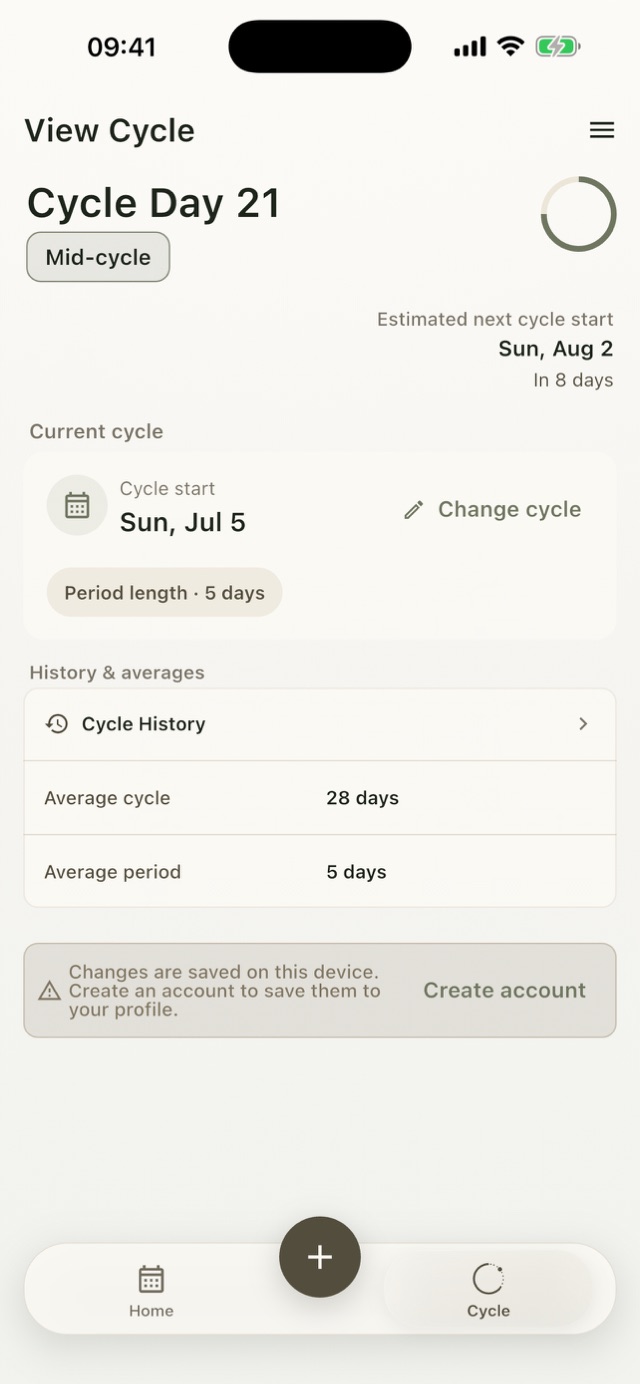
A planning estimate is a movable date context, not a health conclusion
Umorrow uses recorded cycle timing and averages to estimate future planning context. The estimate may change when new information is recorded. It does not diagnose a condition, confirm ovulation, identify fertility, recommend treatment, or guarantee a future date.
Actual Umorrow workflow
- Record the current cycle start and the planning settings you know.
- Review the estimated next start and cycle context in the app.
- Use that context to compare ordinary plans on the calendar.
- Record a later cycle when it starts.
- Recheck future cycle-day plans because the estimate can update.
What the estimate can do
It can give ordinary planning context, help place cycle-day events, and make a future calendar easier to review. It is deliberately labelled as an estimate.
What it cannot do
It cannot determine a biological event, assess risk, diagnose irregularity, predict how you will feel, or replace advice from a qualified professional.
How to plan responsibly
Keep fixed obligations on fixed dates, allow flexibility around estimated context, and update the record when the next cycle begins. If a decision affects health, contraception, fertility, treatment, or safety, use an appropriate professional or validated medical method instead.
Plan by cycle day or calendar date
Create your Umorrow account to keep your plans in sync across devices. Available for iPhone and Android.